Staying Inside? GoNoodle
Although it is best to play outside and limit screen time, GoNoodle is a fun alternative when it is raining or when you have earned a little screen time.

GoNoodle is offered as an online game, as well as through the “GoNoodle Kids” app on iPads and iPhones. Users can choose from a selection of interactive videos that engages the audience to dance, run, jump, stretch, and “practice moments of mindfulness” while the video plays.
Many teachers incorporate this technology into their classrooms as short breaks for the students to get out of their chairs, and parents use it to make screen time more active.
For more information on this free game, visit the website here
To view the Forbes article on GoNoodle and interview with the GoNoodle co-founders, click here
March is National Nutrition Month
March is National Nutrition Month!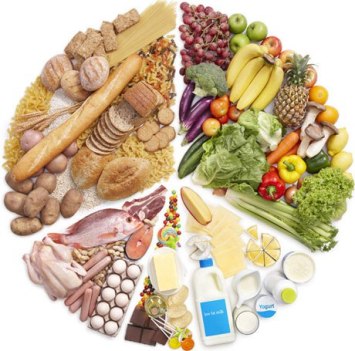
Changing your nutritional habits can be hard, but very important to live a strong and healthy life!
To reach your nutritional goals, try:
- Starting with small changes
- Instead of making HUGE goals, try to create healthy habits for 3-4 days straight, and then increase the amount to 1 week, and so forth!
- For example: Try eating 3 servings of vegetables for 3-4 days straight. Once you have done that, try eating 3 servings of vegetables for one week! Or try eating 3 servings of different colored vegetables for 3-4 days straight
- Be active in your own way
- Focus on physical activity that you enjoy!
- Not ready for too strenuous of an activity? Talk a walk with a friend, walk your dog, dance during commercial breaks, or anything else that seems fun!
- Team up! Find a friend with similar goals and do them TOGETHER
- Celebrate success
- Think of each change as a “win”
- Reward yourself (in healthy ways) when you have reached your goals
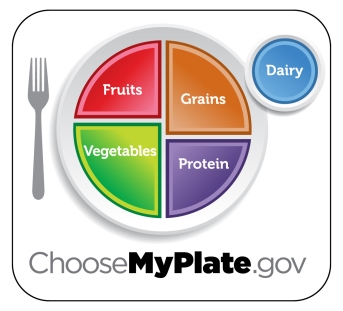
Eat Right With MyPlate
Follow these recommended MyPlate guidelines. For more information on MyPlate, click here!
- Make half your plate fruits and vegetables
- Aim to eat MORE vegetables than fruits
- Try to have a variety of color
- Make half your grains whole grains
- Look for whole grains listed first or second on the ingredient list
- Try oatmeal, popcorn, whole-grain bread/pasta, and brown rice
- Vary your protein
- Include seafood, unsalted nuts/seeds, beans and peas so you aren’t always eating meat-based protein
- Choose low-fat or fat-free dairy products
- Opt for unflavored greek yogurt and add your own mix-ins such as fruit, peanut butter, or whole-grain cereal
- Drink and eat less sodium, saturated fat, and added sugars
- Choose vegetable or plant-based oils over butter and other animal-based fats
- Drink water instead of sugary drinks
- Choose fruit for dessert
Children’s Dental Health Month
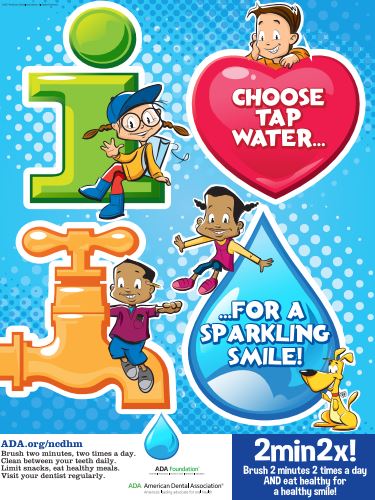
February is National Children’s Dental Health Month!
Having healthy teeth helps you chew foods, speak clearly, and look your best. By taking care of your teeth you can help prevent plaque (a film of bacteria that sticks to your teeth) and can cause gum problems and cavities – both of which can be very painful!
You should be brushing your teeth 2 times a day – usually after breakfast and before bed (but it is also great to brush after lunch and/or sugary snacks) – for at least 2 or 3 minutes each time you brush.
In addition to this, it is important to:
- Brush ALL of your teeth, especially the back ones
- Brush your tongue
- Floss
- Change your toothbrush every 3 months
- Visit the dentist twice a year (or more often if needed)
- Ask your doctor if you should be using an antibacterial mouth rinse
- Choose clean, tap water to drink over other beverages
- Limit sugary treats and drinks
Click here for fun dental activity sheets, such as the ones below:
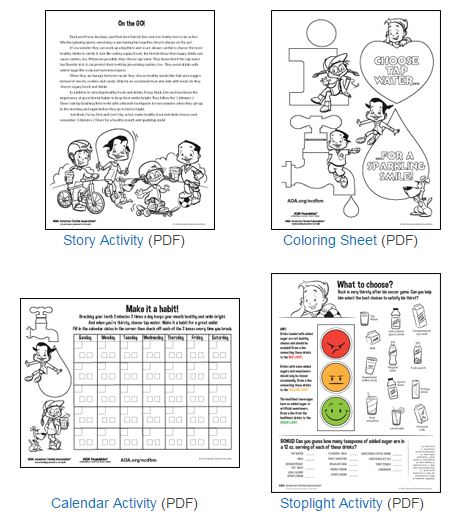
For more information on dental health, click here
MyPlate Relay Race
The MyPlate Relay Race game teaches youth about the MyPlate nutrition guidelines while reinforcing knowledge in a fun and active way!

The MyPlate visual represents how food group portions can be represented during a real meal. According to the plate, vegetables should be eaten the most often, then grains, fruit, protein, and dairy. At least half of your plate should be fruits and vegetables!
For the MyPlate Relay Race:
Materials: Fake food, MyPlate plates (or make your own!)
1. Review the 5 food groups represented on MyPlate and what foods belong to each food group
Vegetables – leafy greens, carrots, celery, corn, peppers, etc.
Grains – Breads, pastas, oatmeal, rice, cereal, tortillas, etc.
Fruits – berries, apples, bananas, melons, oranges, etc.
Protein – nuts, beans, tofu, chicken, beef, fish, seeds, eggs, peanut butter, etc.
Dairy – milk, cheese, yogurt, etc.
**For a whole list of the foods in various food groups, visit the choosemyplate.gov website, scroll over “MyPlate”, scroll over the desired food group, and select “Food Gallery”**
2. Split into 2 teams (or more depending on the amount of players) and line up one after another
3. On the other side of the room, have a bucket of fake food and the MyPlate plate (for each team)
4. Taking turns, the first player will run to the other side and assemble the MyPlate correctly with the fake food. Have an adult or designated player review the MyPlate and make sure it is correct before clearing the plate
5. Once the plate is cleared, that player will run back to their team. Once they have crossed the line, the next player can go
First team to have everyone assemble their MyPlate wins!
February is American Heart Month

February is American Heart Month!
In the United States, heart disease is the leading cause of death. There are many things you can do to keep your heart healthy, and prevent heart disease.
By starting healthy habits at a young age and keeping them up, you can have a better chance at living a longer, happier, and healthier life in the future.

There are “7 simple things” you can do to make sure your heart is healthy:
- Avoid smoking and using tobacco products
- Be physically active every day
- Eat a heart-healthy diet
- Keep a healthy weight
- Keep your blood pressure healthy
- Keep your total cholesterol healthy
- Keep your blood sugar healthy
What is a “heart-healthy diet”?
- Foods low in salt and added sugars
- Eating plenty of fruits and vegetables
- Choosing whole grain foods instead of refined grains
- Eating fish twice a week
- Limiting unhealthy fats (saturated fat and trans fat) such as butter, fatty meats, high fat cheese, etc.
- Limiting how much red meat you eat. Try lean chicken or meat-alternatives for protein such as nuts or beans
- Choose low-fat milk, cheese, and yogurt
- When hungry for a snack, try eating nuts. 1 serving of nuts is usually a small handful, or 1.5 ounces of whole nuts
- Choose water instead of sugary drinks
How much exercise do you need a day?
60 minutes every day!
60 minutes, or 1 hour, is recommended every day for kids. However, this does not have to be all at once. In the morning, you could try walking or biking to school if you live close – run around during recess or gym class – have a race with a friend after school, etc!
For more information, click here.
The Kids Choice Program will be Returning to the BGC

Last fall, the Kids Choice Program visited the Boys & Girls Club of Bloomington – Lincoln Street Unit to teach the K-3rd graders. We are excited to announce that we will be returning to the Lincoln Street Unit this spring, to lead programming for their 4th-6th graders!
What is the Kids Choice Program?
The Kids Choice Program is ran through the Monroe County Health Department and visits local schools and after-school programs to promote nutrition, physical activity, and emergency preparedness. The lessons taught incorporate curriculum from MyPlate, Let’s Move Campaign, Coordinated Approach to Child Health (CATCH), and FEMA’s Emergency Preparedness Guidelines.
Last Fall at the BGC – Lincoln Street Unit:
In September 2016, we began Kids Choice at the Boys & Girls Club of Bloomington – Lincoln Street Unit for the first time. During our fall programming there, we taught lessons to the K-3rd graders on:
-
“GO” Activities
-
MyPlate
-
GO, SLOW, and WHOA Foods
-
Healthy vs Unhealthy Fats
-
Fruits and Vegetables
-
Protein
-
Whole Grains vs Refined Grains
-
Dairy
These lessons consisted of a review from the last visit’s topic, a brief lesson, non-elimination physical activity games that reinforced knowledge of the topic, and a healthy snack for the members to try!
Favorite Game to Use:
A great “go-to” game for reinforcing knowledge on the teaching topics was setting up signs with different categories and choosing certain actions for the members to do while they moved to that sign.
For example, when teaching “GO, SLOW, and WHOA” foods there were 3 signs – 1 for “GO”, 1 for “SLOW” and 1 for “WHOA” foods. When a “GO” food was shouted, members were to RUN to that sign. When a “SLOW” food was called out, members were to HOP to that area. Lastly, when a “WHOA” food was called, members were to BEAR CRAWL to that sign.
To keep children engaged and always moving, we stay away from elimination games. In order to reinforce learning, members that went to the wrong sign were able to do 5 star jumps to get back into the game. That way, members always remain involved.
This “signs” game was also played to teach members about the different food groups, different types of protein, and can be used for almost anything. It was great because it was simple enough for K-3rd graders to understand, and actively keep everyone involved and moving around.
For questions or comments regarding the Kids Choice Program, email monroemrc@co.monroe.in.us
December is Safe Toys & Gifts Month

December is Safe Toys & Gifts Month
Follow these guidelines to ensure safer gift giving.
Before Purchasing:
- Read the warning labels and instructions
- Evaluate if the toy is appropriate for the child’s age and ability
- Avoid toys with sharp points, rods, or dangerous edges
- Stuffed toys should be washable
- Painted toys should be covered with lead-free paint
- Art materials should say nontoxic
- **Be careful of hand-me-down or older toys. Even though these may have sentimental value or be more cost effective, they may not meet current safety standards
- For children’s sunglasses – check the lenses and frames, many can break and cause injuries
- Buy sturdy toys that will withstand impact and not break into dangerous shards
- Look for the “ASTM.” This means the product meets the national safety standards set by ASTM International
- Avoid toys that shoot or include parts that fly off. Always remember that BB guns are NOT toys!
Before Allowing Child to Play:
- Inspect the toy for safe, study construction
- Explain to the child how to use the toy and answer any questions
- Fix or throw away any broken pieces
While Playing:
- Supervise your children while playing; make sure younger children are not playing with toys meant for older children
- Play close supervision to craft projects. Crafts involving scissors or glue can be very dangerous for children’s eyesight
- For sports, have children wear the proper protective equipment (helmet, eye guards, face shields)
- After play, store the toys away properly and in a safe location to avoid risks or falls
For more safety tips for toys and gifts, visit http://www.preventblindness.org/safe-toy-checklist and http://kidshealth.org/en/parents/safe-toys.html
The Great American Smokeout

Cigarettes and smokeless tobacco kills hundreds of thousands of Americans each year.
Every day, about 1,300 people die from smoking alone.
WHY is smoking and smokeless tobacco SO bad?
Tobacco (whether you are smoking it, chewing it, or using an e-cigarette) contains nicotine and many other poisonous chemicals. This can cause heart disease, cancers, and many other diseases.
In addition to these diseases, smoking can also cause:
- Bad breath
- Yellow teeth
- Smelly clothes or furniture
- Colds, coughs, and asthma problems
- Difficulty during physical activities
- Less money (cigarettes and tobacco products are expensive!
AND SECONDHAND SMOKE!
Even if you are not the smoker, being exposed to smoke can cause cancer, diseases, lung infections, ear infections, and asthma problems.
Learn more about:
Why smoking stinks here
Secondhand smoke here
If you have a loved one that smokes, read this article about how you can help and support them
Are you a parent, teacher, or health educator and want to help kids learn about the Great American Smokeout and dangers of tobacco? Click here for resources!
Lesson 4 – GO, SLOW, WHOA Part 2
For our 4th lesson at the Boys & Girls Club Lincoln Street Unit, we went more in depth on GO, SLOW, WHOA Foods, to review before we move on to the specific food groups next week!

“Do you think fruits and vegetables are ALWAYS going to be GO foods or do you think they can sometimes be WHOA foods too?”
GO fruits and vegetables are always going to be fresh, frozen, or canned with nothing added to them
A fruit or vegetable could become a WHOA food when there is a lot of salt, sugar, fat, or syrup added to them.
Example: GO vegetable – sweet potato
SLOW vegetable – sweet potato with a little oil or salt
WHOA vegetable – sweet potato french fries (deep fried/battered)
Challenge! Try 2 new GO foods that you have never had before. Share your experience at our next lesson!
GO/SLOW/WHOA Scenario Game
To emphasize that GO choices keep you healthy and WHOA choices can lead to unhealthy behaviors, members lined up in the middle of the gym and did actions moving forward if they made a GO choice, and backwards for WHOA choices in this scenario story.
For example: “Once you get home, you are SO thirsty. Looking into your fridge, you see the options of ice water, low fat plain milk, and chocolate whole milk. You know water and low fat plain milk are the healthier choices, but you drink the chocolate whole milk – hop backwards 3 times.”
Create your own GO, SLOW, WHOA scenario story! Utilize fun actions such as hopping, running, star jumps, bear crawls, crab walking, and more!